
5 Essential Things to Consider Before You Buy
What makes selecting the right digital piano so challenging? Rather than simply listing specific brands or models we prefer, this comprehensive guide walks you through the critical factors worth evaluating when making your purchase decision—organized in order of importance.
By following this structured approach, you'll confidently end up with a digital piano that matches your playing style, fits within your budget, and delivers years of musical enjoyment. These considerations are presented in a prioritized sequence to help streamline your decision-making process.
1. Portable or Stationary?

The initial question to answer when shopping for a digital piano is whether you need something portable or a permanent fixture. Will you be transporting your instrument to performances, lessons, or practice sessions? Or will it remain in a dedicated space at home?
This decision point is rather straightforward and essentially sets the direction for everything else. Once you've determined your mobility requirements, you'll have a much clearer path forward.
Choosing portability opens doors to instruments like traditional digital pianos, various keyboard series from leading manufacturers, and versatile stage piano options. These typically offer lighter construction and easier transport without sacrificing essential features.
Opting for a stationary setup allows you to explore elegant console digital pianos with premium cabinetry, sophisticated three-pedal systems, and advanced acoustic technologies. These home instruments deliver superior sound projection and often feature furniture-quality finishes that complement your living space.
2. Piano Touch
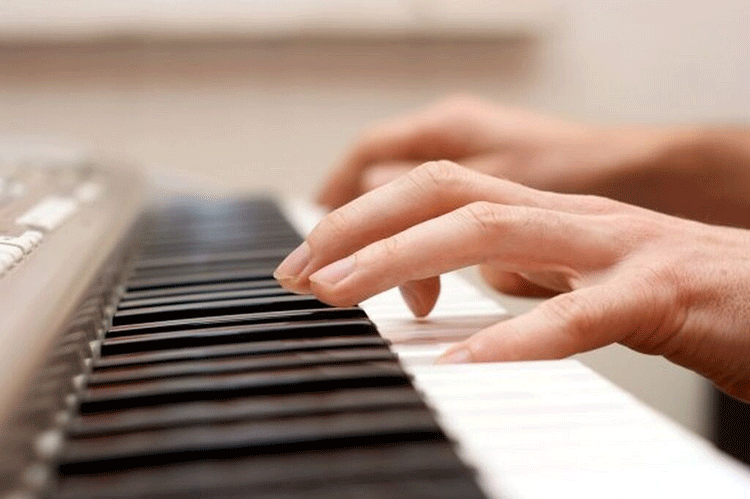
The keyboard action stands as arguably the most crucial element when evaluating digital pianos. Touch sensitivity on a digital instrument differs significantly from acoustic alternatives. Think of it like comparing the grip feel between different tennis rackets—the tactile response becomes an extension of your expression.
Your fingers interact directly with the keys, and that physical connection serves as your primary interface for musical expression. When the hammer action feels unnatural or unresponsive, achieving a satisfying playing experience becomes nearly impossible.
Finding the sweet spot between key action quality and budget constraints requires careful consideration. You might discover a keyboard action you absolutely love, but if it stretches beyond your financial comfort zone, practical adjustments become necessary. Focus on identifying the best weighted key response within your price range.
Most serious players won't settle for anything less than weighted action combined with 88 graded hammer keys when the goal is authentic piano technique development. You may find excellent escapement mechanisms that provide remarkable dynamic range at comfortable price points.
Pro Tip: Always test the keyboard action in person when possible. The feel of the keys is a deeply personal preference that varies significantly between manufacturers and models.
3. Piano Sound Quality
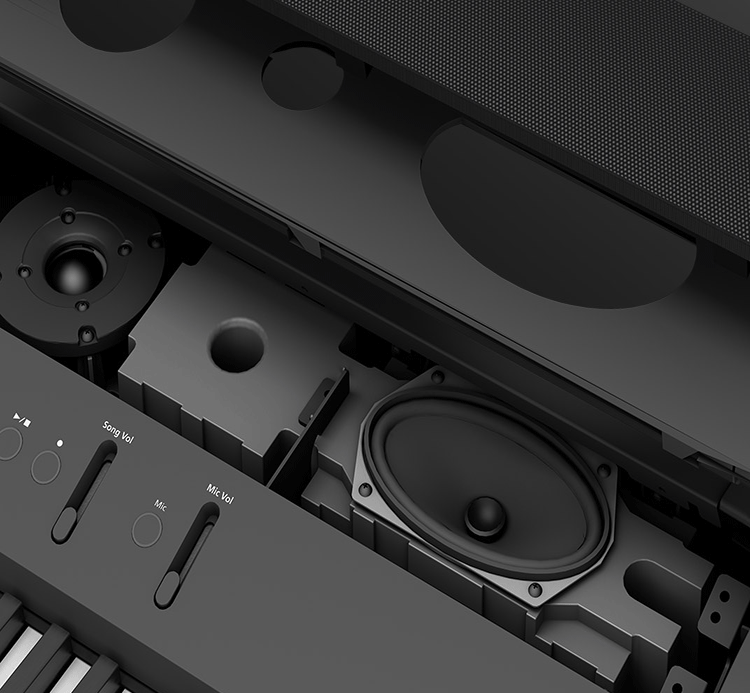
The subsequent consideration involves the piano's tonal characteristics. While some musicians might rank sound quality above touch, the vast majority who spend their practice time with a grand piano voice patch engaged will find that accurate key response takes precedence over pure sonic character.
After establishing that you enjoy playing the instrument, attention naturally shifts to finding a sound engine that truly inspires creativity. Digital pianos offer diverse acoustic sampling libraries, and the technological approach combined with tonal richness can dramatically transform your musical experience.
When auditioning different sounds, try connecting quality headphones to experience both the built-in speakers and the direct audio output. Premium headphone technology captures subtle nuances that built-in speakers might mask, revealing the true depth and character of the instrument's voice.
Ultimately, the objective involves securing an authentic piano tone that motivates regular practice. Avoid excessive concern about precise polyphony specifications—instead, trust your ears and choose the sound that resonates with your musical sensibilities.
4. Features and Connectivity
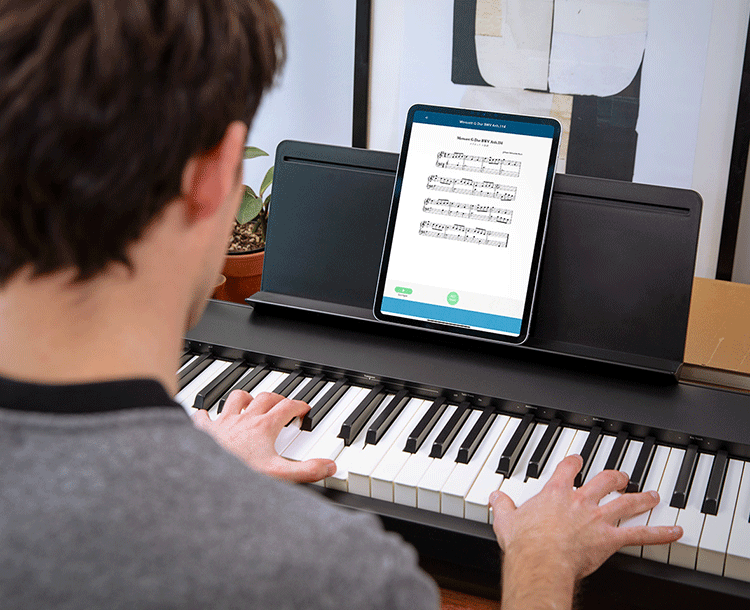
Having addressed the foundational considerations, your selection criteria should begin narrowing considerably. Now you can concentrate on the specific feature set that aligns with your needs.
Does Bluetooth connectivity matter for your workflow? What about wireless app integration for expanded functionality? Would a 5-pin MIDI output serve your recording setup? These connectivity options can significantly enhance your creative possibilities.
Consider whether a limited selection of onboard voices satisfies your requirements, or if you prefer access to hundreds of different instrument sounds including orchestral strings and synthesizer patches. Do you require advanced arpeggiator features? What about microphone input or auxiliary line connections for external audio sources? Would built-in recording capabilities benefit your practice sessions?
These represent the primary feature categories worth examining. Virtually all quality digital pianos include fundamental tools like metronomes, transpose functions, headphone outputs, and similar essentials as standard equipment.
5. Budget and Value
Finally, your investment level naturally shapes available options. Quality digital pianos span a wide price spectrum, from accessible entry-level instruments to professional-grade workstations commanding premium prices.
Establish your budget ceiling before beginning serious comparisons. This prevents the frustration of falling in love with instruments beyond your means while ensuring you allocate resources effectively across the features that matter most to your musical journey.
Remember that a well-chosen digital piano represents a long-term investment in your musical development. Prioritizing authentic touch response and inspiring tone over flashy features typically yields greater satisfaction over time.
Featured Product
Yamaha P225 Digital Piano – 88 Weighted Keys
Experience authentic piano performance with Yamaha's acclaimed GHC weighted action keyboard and rich Pure CF sound engine sampling.
Shop Yamaha P225Making Your Final Decision
Selecting the ideal digital piano involves balancing multiple factors unique to your circumstances. By systematically evaluating portability needs, keyboard action quality, sound characteristics, feature requirements, and budget parameters, you'll arrive at a confident, well-informed purchase.
The perfect digital piano feels like a natural extension of your musical expression. Take your time, test different options when possible, and trust the instrument that inspires you to play more.