
Discover the surprising capabilities of modern arranger keyboards in professional music production
When someone mentions an arranger keyboard, your mind might instantly picture a performer at a hotel lounge playing nostalgic cover tunes with automated accompaniment. While that image has some truth to it, you would be overlooking the remarkable evolution these instruments have undergone. Today's arranger keyboards are sophisticated studio companions that deserve a second look from serious producers.
Contemporary arranger keyboards, including premium models from leading manufacturers, have transformed dramatically over the years. They now deliver exceptional sound quality, advanced humanized sequencing capabilities, and an impressive array of features that make them viable options for modern music production. Let us explore why this matters for your creative workflow.
"Modern arranger keyboards offer over 500 styles, updated favorites from previous generations, vocal processing capabilities, touch displays, and the ability to save custom styles and settings—all in a single instrument."
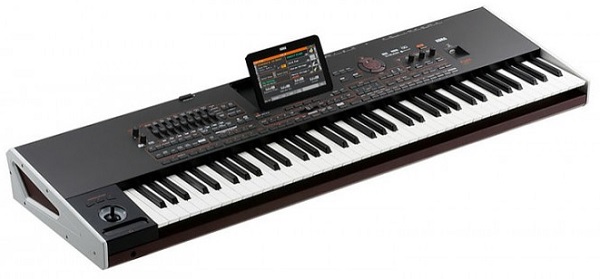
High-end arranger keyboards feature extensive style libraries, professional-grade processing, and intuitive touch interfaces for seamless studio integration.
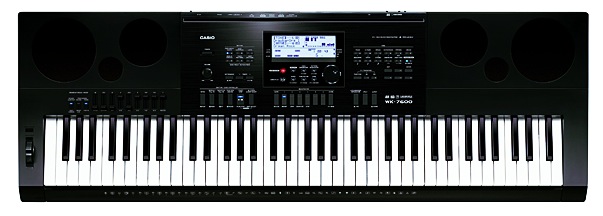
Affordable arranger models provide hundreds of editable styles, 8-track rhythm creation, and built-in sequencers for recording—all at accessible price points.
Your Personal Music Production Library
One often overlooked application for arranger keyboards is their role as a comprehensive music production library replacement. When working on audio-for-video projects, you frequently need several minutes of suitable background music to support a scene. Whether your project calls for bossa nova, orchestral arrangements, or hard-hitting rock, an arranger keyboard can generate an instrumental foundation within minutes.
Considering the expense of typical construction kit sample libraries, it would not require many projects to offset the investment in a quality arranger keyboard—and these instruments often provide greater flexibility in customization.
Enhanced Musicality
While the musicality of these keyboards has improved significantly, you still want to avoid sounding like generic background music. As a musician, you possess a distinct advantage: you can record additional overdubs with authentic instruments—percussion, piano, guitar—and the complete production transcends its arranger-based origins.
Time Efficiency
Although this approach requires somewhat more effort compared to simply selecting a preset and capturing the results, you will save considerable time compared to building productions entirely from scratch. The foundation is already established—you simply enhance it with your personal touch.
Naturally, you do not need to rely on arranger keyboards exclusively for complete productions. If you are composing a song, you can establish the chord progression on your arranger and perform along with a rhythm section instead of just a metronome click. You do not need to maintain perfect timing with the scratch track—but if you prefer to continue, keep reading.
Transforming Demos Into Professional Productions
For songwriting purposes, arranger keyboards function like having a collaborative partner who can produce phrase after phrase until you discover something that resonates with you. In fact, you might find yourself wanting to incorporate the demo track into your final production.
As an illustration, imagine you are experimenting on your arranger and develop an excellent foundation for a rock composition, but you want to substitute some of the arranger's built-in sounds. Many arrangers allow you to save arrangements as Standard MIDI Files, which can then be imported into your DAW. If certain arranger sounds appeal to you, simply route MIDI tracks through your MIDI output back to the arranger, then record the audio back into your DAW. Alternatively, you can direct the other MIDI tracks to multi-timbral virtual instruments in your DAW for enhanced sonic possibilities.
Professional Workflow Tip
Some arrangers can save songs to external storage devices like USB drives. If you can solo individual sounds or mute everything except one, you can export each sound as a separate file. Your next step would be importing each file into your host DAW, ensuring they all begin at the same timestamp, then processing, mixing, automating, and adding overdubs as desired.
If no option exists for saving audio to portable media, you can alternatively solo an individual track, route it to the arranger's audio output, and capture the output into your host. Repeat this process for each track until all necessary data resides in your host program.
Synchronizing the recorded tracks may present a minor challenge. However, since your arranger will likely include some form of count-in or introduction, if you capture that at the beginning of the track, you can easily align the metronome clicks for each track until they are perfectly synchronized. Another approach involves patching the host's MIDI output to the arranger's MIDI input—a start command from the host will trigger the arranger to begin playing. Simply return to the beginning of the host's sequence each time, solo a track, record it, proceed to the next track, and continue until all sounds are in sync with the host.
Time Is Money, They Say...
A quality arranger keyboard can save you valuable time, whether by generating tracks that inspire new song ideas, providing complete music beds for audio-for-video projects, or creating patterns you can incorporate into your own productions. And naturally, when the session wraps up, you can always set up your arranging keyboard, perform at your local venue, and deliver a polished rendition of your favorite classics.
Featured Arranger Keyboard
Yamaha PSR-EW425 76-Key Portable Keyboard Arranger
Experience professional-grade arranging capabilities with 76 touch-sensitive keys, extensive style library, and powerful built-in speakers—perfect for studio production and live performance alike.
Yamaha PSR-EW425Key Takeaways
Replace expensive sample libraries with versatile arranger capabilities
Export MIDI and audio for seamless DAW integration
Save time while maintaining creative control over productions